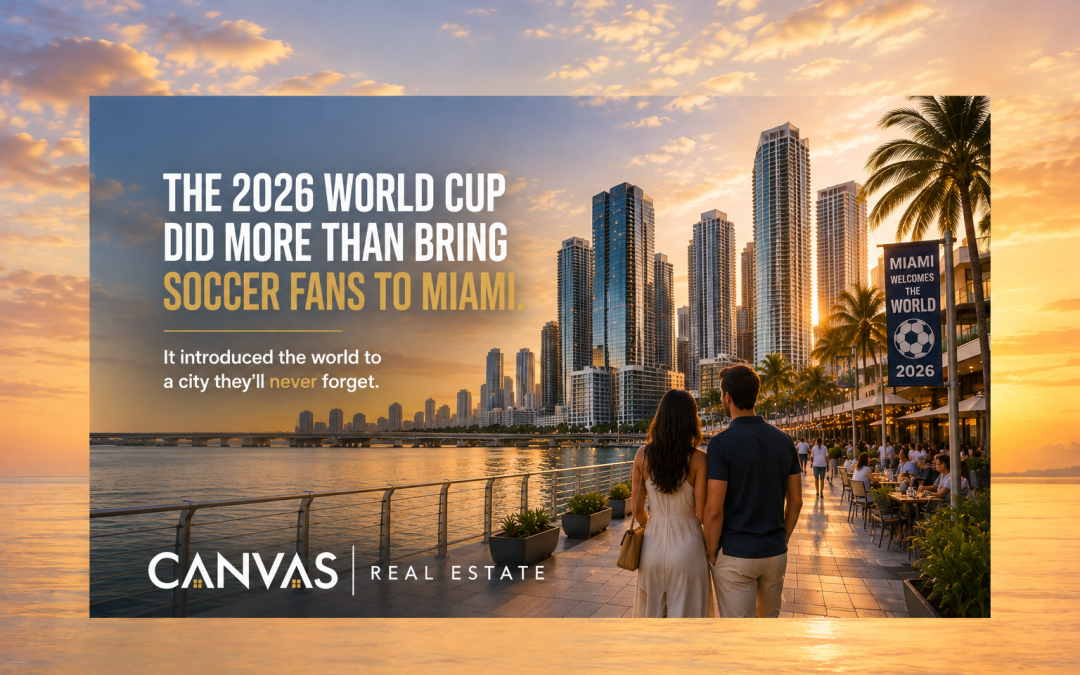
The 2026 World Cup did more than bring soccer fans to Miami. It brought another massive wave of international attention to a city that was already one of the most recognized real estate markets in the world.
Miami hosted seven World Cup matches, and during the tournament we saw exactly what you would expect: hotels filled up, short-term rental demand jumped, restaurants were busy and visitors poured into South Florida from around the world.
But for me, the bigger story is not what happened during those few weeks. The bigger story is what happens after all those visitors go home.
Think about how many people came to Miami for a soccer game and discovered Brickell, Downtown, Miami Beach, Coconut Grove and Coral Gables for the first time. They came for the World Cup, but they also experienced the restaurants, the beaches, the lifestyle, the weather and everything else that continues attracting people to South Florida.
Brickell and Downtown were obvious winners because visitors want convenience. They want restaurants downstairs, entertainment nearby, easy transportation and access to everything Miami has to offer. Those are exactly the same things renters and buyers look for when they decide where they want to live.
Miami Beach is a completely different story, but just as powerful. There are very few places in the United States with that kind of international name recognition. A major event like the World Cup simply puts that brand in front of millions more people.
Then you have areas like Coconut Grove and Coral Gables. Maybe they don't get the same headlines, but they offer something many renters and buyers are looking for: neighborhoods, restaurants, walkability and quality of life while still being close to the center of Miami.
This is why I always say you cannot invest in real estate based on one event. The World Cup comes and goes. What matters is whether people still want to be there when the event is over. Miami has tourism, international business, population growth, limited desirable land and a lifestyle people continue paying a premium to experience.
The World Cup didn't create Miami's real estate story. It simply introduced Miami to another few hundred thousand potential future renters, buyers and investors. And that is the opportunity I would be watching now: not what happened during the tournament, but which neighborhoods continue benefiting from all the new people who discovered Miami because of it.