
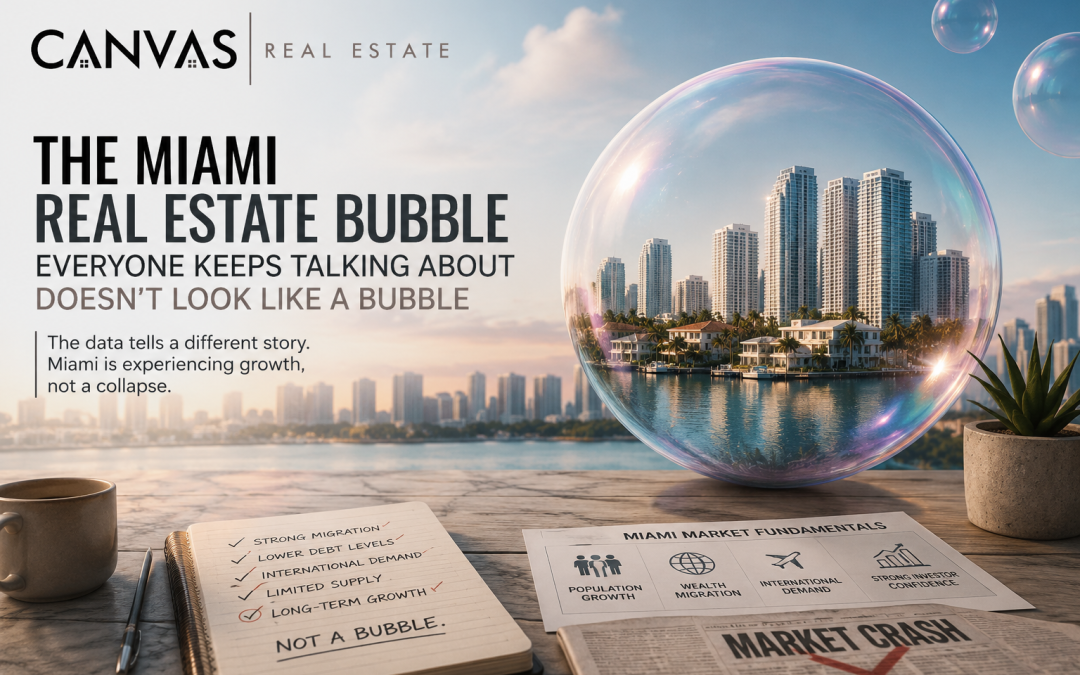
Every time Miami real estate reaches a new milestone, the same prediction appears. Someone says the market is in a bubble. Someone says a crash is coming. Someone says prices are unsustainable. Then people share the headlines, post them on social media, and wait for the collapse they've been hearing about for years. The problem is that many of those predictions ignore one important thing: the actual data.
Let's rewind for a moment. The housing crash of 2008 wasn't simply about rising prices. It was fueled by risky lending, excessive debt, speculative buying, and homeowners purchasing properties they couldn't truly afford. Today's market looks dramatically different. According to research highlighted by MIAMI REALTORS®, residential mortgage debt as a percentage of GDP has been declining for years and sits far below the conditions that existed before the Great Recession. In other words, today's homeowners are carrying significantly healthier debt levels than those who fueled the last housing collapse.
Yes, Miami home prices have risen dramatically. Since 2019, Miami-Dade home values increased roughly 77%, outperforming the national average. Critics point to that number and immediately scream "bubble." But prices don't rise in a vacuum. Miami has experienced extraordinary wealth migration, population growth, international demand, and limited housing supply. Those are classic supply-and-demand fundamentals, not necessarily signs of a speculative bubble. Even analysts who rank Miami as a high-risk market acknowledge that strong migration trends, favorable tax policies, and international demand continue to support pricing.
Here's the part most people miss. If Miami were truly on the verge of collapse, why does capital from around the world continue to flow here? International buyers remain highly active. Wealthy individuals continue relocating from high-tax states. Luxury transactions continue setting records. Investors are still making long-term bets on South Florida because they see something many headlines ignore: Miami is no longer just a city. It has become a global financial, business, and lifestyle destination.
For consumers, this doesn't mean every property is a great investment or that prices can only go up. Real estate markets always move in cycles. Some neighborhoods will outperform others. Some properties will appreciate faster than others. But there is a significant difference between a market experiencing a healthy adjustment and a market headed for a catastrophic collapse. The data increasingly suggests Miami is experiencing normalization, not implosion. Inventory has improved, buyers have more choices, negotiations are returning, and the market is finding a healthier balance.
For Realtors, this moment represents an incredible opportunity. Consumers are confused. They are hearing one thing on social media and another thing from the market itself. They need professionals who can separate headlines from facts. The agents who thrive in the coming years will not be the ones spreading fear. They will be the ones providing context, explaining market dynamics, and helping clients make informed decisions based on data rather than emotion.
At CANVAS Real Estate, we believe this is exactly where great agents distinguish themselves. Anyone can repost a scary headline. Very few can explain what is actually happening. The future belongs to Realtors who understand economics, migration trends, financing, investment opportunities, and wealth creation. Consumers don't need more noise. They need trusted advisors who can help them navigate change with confidence.
The irony is that the people who have been predicting Miami's collapse for years are often the same people who missed one of the greatest wealth-building opportunities in modern real estate. While they waited for the bubble to burst, homeowners built equity, investors built portfolios, and entrepreneurs built businesses. History has shown that opportunity rarely looks obvious in the moment.
So the next time someone tells you Miami is in a bubble, ask them a simple question: if the market is truly about to collapse, why are so many investors, businesses, entrepreneurs, and families still betting their future on South Florida? The answer may tell you far more than the headline ever will.