The Headlines Got Florida Real Estate Wrong. Again

The Headlines Got Florida Real Estate Wrong. Again

The biggest shift isn't demand it's leverage. Buyers today have something they haven't enjoyed in years: options. Inventory has grown, sellers are negotiating, and concessions are becoming more common. That doesn't mean Florida is weak. It means we're returning to what many would consider a healthier, more balanced market where informed buyers can negotiate without the bidding wars that defined the pandemic years.

That should change the conversation for consumers. Instead of asking, "Should I wait for prices to fall?" a better question is, "Can I negotiate a better deal today than I could two years ago?" The answer for many buyers is yes. In real estate, your purchase price, financing terms, and seller concessions often have a greater impact on your long-term return than trying to perfectly time the market.

For sellers, this market requires a different strategy than it did in 2021 or 2022. Pricing correctly from day one matters more than ever. Buyers have choices, and overpriced listings are no longer receiving automatic offers. The homes that are selling are the ones that are well-presented, competitively priced, and marketed aggressively. Success today comes from preparation—not simply putting a sign in the yard.

For Realtors, this market is separating advisors from order takers. The agents winning today aren't waiting for lower interest rates or hoping inventory shrinks. They're educating clients on financing strategies, negotiating stronger contracts, and helping buyers recognize opportunities that didn't exist just a few years ago. Markets like this reward knowledge, not luck.

Investors are paying attention for the same reason. They understand that the best opportunities often appear when uncertainty causes others to hesitate. While appreciation may be more modest than during the pandemic boom, improving inventory, resilient demand, and Florida's continued population growth continue to support the state's long-term outlook.

The lesson is simple: stop letting headlines make your real estate decisions. Headlines are designed to generate clicks. Wealth is built by understanding market cycles, recognizing value, and making informed decisions based on facts rather than fear. Florida's market isn't behaving like the boom years, but it isn't behaving like a crash either. It's becoming a market where expertise once again matters.

Whether you're buying your first home, selling your current one, investing in your next property, or building a real estate career, this is the time to lean into education not emotion. The agents who can interpret the market instead of simply reporting it will earn their clients' trust, grow their businesses, and help shape the next chapter of Florida real estate.


The Biggest Threat to Your Real Estate Business Isn’t the Market. It’s Believing the Headlines

The Biggest Threat to Your Real Estate Business Isn’t the Market. It’s Believing the Headlines

If your business strategy changes every time you read a headline, you're already behind.

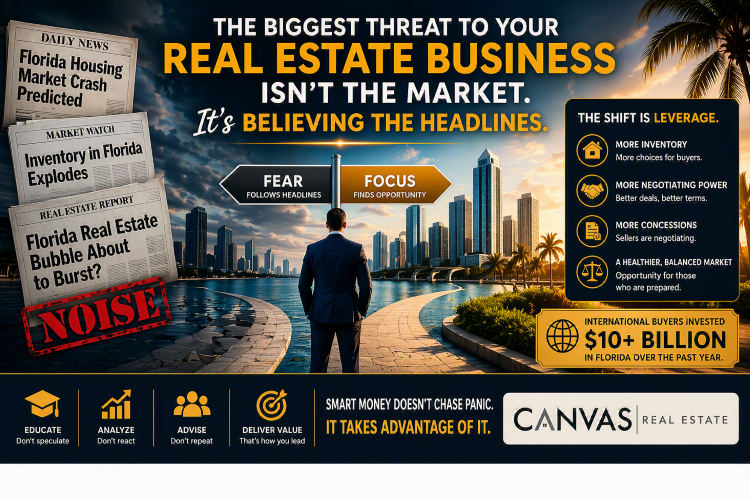
One day the media tells us Florida is crashing. The next day we're told buyers are back. Then we hear inventory is exploding. Meanwhile, the people actually investing millions of dollars aren't making decisions based on clickbait—they're following opportunity. Florida continues to attract billions in international real estate investment because experienced investors understand something the headlines don't: markets change, but great assets in desirable locations remain valuable.

The average buyer asks, "Should I wait?" Professional investors ask, "Has my negotiating position improved?" Those are two completely different conversations. More inventory, more negotiating power, and a market that's forcing sellers to compete isn't necessarily bad news—it's exactly the type of environment many investors look for.

Here's the uncomfortable truth for Realtors: too many agents spend more time repeating the news than interpreting it. Your clients don't need another person telling them what happened yesterday. They need someone who can explain what today's market means for their long-term financial future. That's where trust is built, and that's where businesses grow.

Consumers should be asking themselves one simple question: If Florida is supposedly becoming a terrible place to own real estate, why did international buyers invest more than $10 billion here over the past year? Smart money rarely chases panic. It usually takes advantage of it.

The next top-producing Realtors won't be the ones who predict the market perfectly. They'll be the ones who help clients see opportunities that everyone else is too distracted to notice. In real estate, the biggest advantage has never been timing the headlines. It's understanding the difference between noise and value.

The Miami Real Estate Bubble Everyone Keeps Talking About Doesn’t Look Like a Bubble

The Miami Real Estate Bubble Everyone Keeps Talking About Doesn’t Look Like a Bubble

Every time Miami real estate reaches a new milestone, the same prediction appears. Someone says the market is in a bubble. Someone says a crash is coming. Someone says prices are unsustainable. Then people share the headlines, post them on social media, and wait for the collapse they've been hearing about for years. The problem is that many of those predictions ignore one important thing: the actual data.
 
Let's rewind for a moment. The housing crash of 2008 wasn't simply about rising prices. It was fueled by risky lending, excessive debt, speculative buying, and homeowners purchasing properties they couldn't truly afford. Today's market looks dramatically different. According to research highlighted by MIAMI REALTORS®, residential mortgage debt as a percentage of GDP has been declining for years and sits far below the conditions that existed before the Great Recession. In other words, today's homeowners are carrying significantly healthier debt levels than those who fueled the last housing collapse. 
 
Yes, Miami home prices have risen dramatically. Since 2019, Miami-Dade home values increased roughly 77%, outperforming the national average. Critics point to that number and immediately scream "bubble." But prices don't rise in a vacuum. Miami has experienced extraordinary wealth migration, population growth, international demand, and limited housing supply. Those are classic supply-and-demand fundamentals, not necessarily signs of a speculative bubble. Even analysts who rank Miami as a high-risk market acknowledge that strong migration trends, favorable tax policies, and international demand continue to support pricing. 
 
Here's the part most people miss. If Miami were truly on the verge of collapse, why does capital from around the world continue to flow here? International buyers remain highly active. Wealthy individuals continue relocating from high-tax states. Luxury transactions continue setting records. Investors are still making long-term bets on South Florida because they see something many headlines ignore: Miami is no longer just a city. It has become a global financial, business, and lifestyle destination. 
 
For consumers, this doesn't mean every property is a great investment or that prices can only go up. Real estate markets always move in cycles. Some neighborhoods will outperform others. Some properties will appreciate faster than others. But there is a significant difference between a market experiencing a healthy adjustment and a market headed for a catastrophic collapse. The data increasingly suggests Miami is experiencing normalization, not implosion. Inventory has improved, buyers have more choices, negotiations are returning, and the market is finding a healthier balance.
 
For Realtors, this moment represents an incredible opportunity. Consumers are confused. They are hearing one thing on social media and another thing from the market itself. They need professionals who can separate headlines from facts. The agents who thrive in the coming years will not be the ones spreading fear. They will be the ones providing context, explaining market dynamics, and helping clients make informed decisions based on data rather than emotion.
 
At CANVAS Real Estate, we believe this is exactly where great agents distinguish themselves. Anyone can repost a scary headline. Very few can explain what is actually happening. The future belongs to Realtors who understand economics, migration trends, financing, investment opportunities, and wealth creation. Consumers don't need more noise. They need trusted advisors who can help them navigate change with confidence.
 
The irony is that the people who have been predicting Miami's collapse for years are often the same people who missed one of the greatest wealth-building opportunities in modern real estate. While they waited for the bubble to burst, homeowners built equity, investors built portfolios, and entrepreneurs built businesses. History has shown that opportunity rarely looks obvious in the moment.
 
So the next time someone tells you Miami is in a bubble, ask them a simple question: if the market is truly about to collapse, why are so many investors, businesses, entrepreneurs, and families still betting their future on South Florida? The answer may tell you far more than the headline ever will. 
 
What Do Billionaires, Investors, and International Buyers Know About Miami That Everyone Else Doesn’t?

What Do Billionaires, Investors, and International Buyers Know About Miami That Everyone Else Doesn’t?

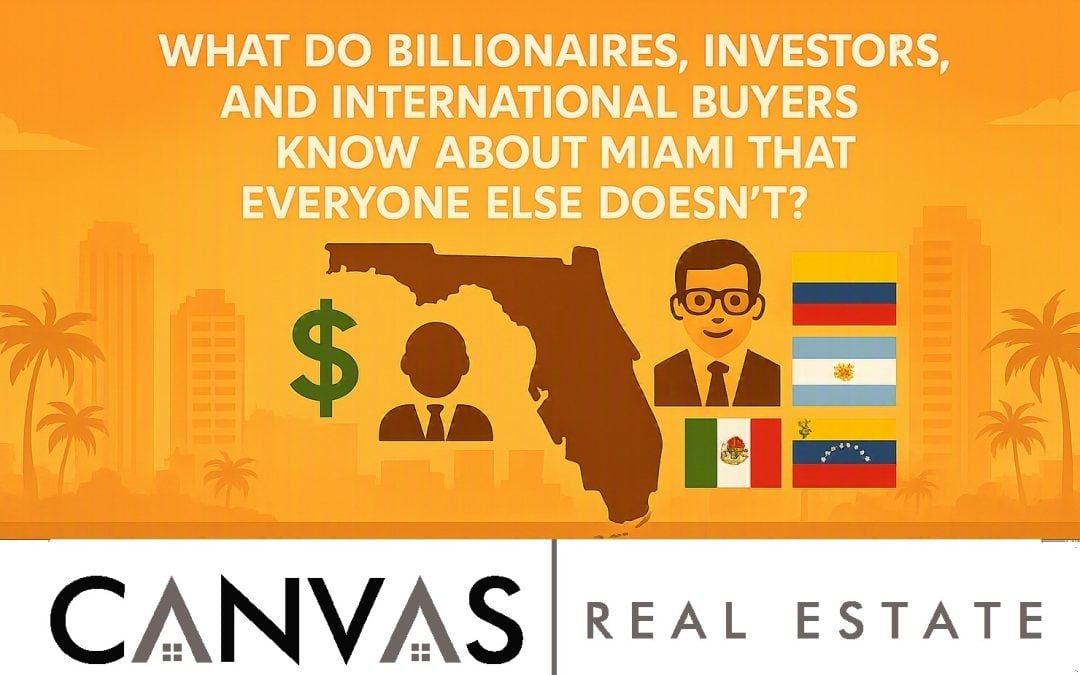
Every few months, someone declares that Florida's real estate boom is over. The headlines point to rising inventory, higher insurance costs, and buyers becoming more selective. Yet while many people are focused on what might be slowing down, they're missing a much bigger story: Miami has once again been named the number one destination for foreign real estate investment in the United States. In 2025 alone, international buyers purchased more than 5,300 South Florida properties and invested approximately $4.4 billion into our housing market. That's a 42% increase from the previous year. 
 
Think about that for a moment. While some people are waiting for the market to tell them what happens next, investors from around the world are already making their move. These aren't speculative buyers chasing a trend. These are families, entrepreneurs, and investors choosing Miami as a place to protect wealth, grow capital, and create opportunities for future generations. Colombia, Argentina, Mexico, Brazil, and Venezuela continue to be among the strongest sources of international demand. 
 
The reason is simple: Miami has become far more than a vacation destination. It is now one of the most important international business hubs in the Americas. The city has transformed into a global center for finance, technology, entrepreneurship, healthcare, and international trade. People are not just buying property here because of the weather. They are buying because they believe in the future of Miami. 
 
What's even more interesting is where the money is flowing. Nearly half of all international residential purchases in Florida occur in the Miami-Fort Lauderdale-West Palm Beach market, and international buyers now account for a remarkable share of new-construction and pre-construction sales. In many projects across South Florida, foreign buyers represent nearly half of all purchases. These buyers are not waiting for perfect conditions. They're making long-term decisions based on long-term confidence. 
 
For Realtors, this should be a wake-up call. Too many agents are spending their days competing for the same listings and the same buyers as everyone else. Meanwhile, an entire world of opportunity is arriving at Miami International Airport every single day. The future belongs to agents who understand international buyers, investment properties, new construction, wealth migration, and cross-border relationships. Consumers need advisors who can explain not just how to buy a home, but how to build wealth through real estate. The agents who develop those skills will separate themselves from the competition.
 
At CANVAS Real Estate, we believe the next generation of top-producing agents will be built differently. They will understand investment opportunities. They will know how to work with international buyers. They will be comfortable discussing wealth creation, financing strategies, and long-term portfolio building. The market is becoming more sophisticated, and the agents who invest in themselves today will be the ones leading tomorrow.
 
For consumers, the lesson is equally important. When investors from around the world continue choosing Miami year after year, it tells us something powerful about the long-term outlook of our market. Real estate cycles come and go. Interest rates move up and down. Headlines change every week. But capital consistently flows toward opportunity, and Miami continues to attract capital from every corner of the globe.
 
The biggest mistake you can make is assuming that today's headlines tell the entire story. The people building wealth through real estate rarely make decisions based on fear. They focus on long-term trends, and one trend remains crystal clear: the world continues to choose Miami. The question isn't whether opportunity exists here. The question is whether you're positioning yourself to take advantage of it.
 
Because while some people are debating Florida's future, billions of dollars are quietly voting for it.
Everyone Is Talking About The People Leaving Florida. Nobody Is Talking About The People Arriving

Everyone Is Talking About The People Leaving Florida. Nobody Is Talking About The People Arriving

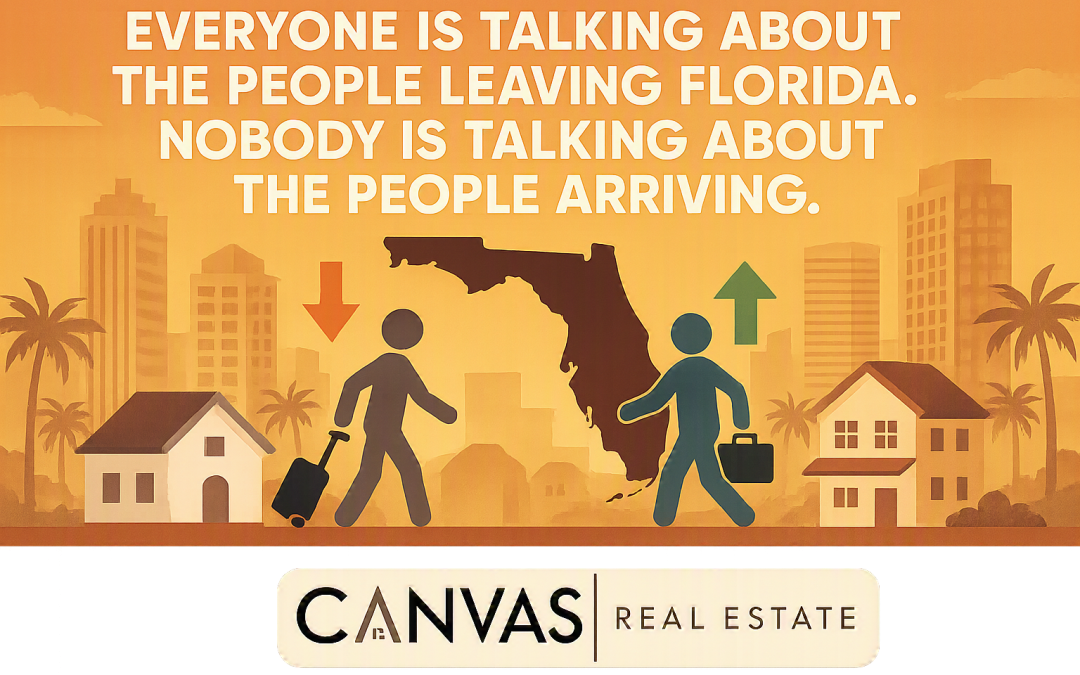
Turn on the news and you'll hear the same story over and over again. Insurance costs are rising. Inventory is increasing. Some homeowners are relocating. Some buyers are sitting on the sidelines. If you only follow the headlines, you might think Florida's best days are behind it. But the reality on the ground tells a very different story.
 
Let me ask you a simple question. If Florida is losing its appeal, why are some of the wealthiest individuals, entrepreneurs, investors, and companies in America continuing to move here? Why are international buyers still investing billions of dollars into South Florida real estate? Why are developers continuing to build thousands of residential units, office towers, hotels, and mixed-use projects throughout the state? The answer is simple: smart money doesn't follow headlines. Smart money follows opportunity.
 
The truth is that Florida is not shrinking; it is evolving. The pandemic created an unprecedented surge in demand that pushed prices higher and made real estate feel easy. That chapter is over. But what comes next may be even more important. Today's market is becoming healthier, more balanced, and more sustainable. Buyers have more choices. Sellers have more data. Investors have more opportunities. That's not a collapse—it's a transition.
 
What excites me most is that many of the opportunities available today didn't exist two or three years ago. Inventory is higher. Negotiations are back. Sellers are more flexible. Investors are finding deals again. Families who were previously priced out are re-entering the market. The people who understand how to navigate this environment are positioning themselves for long-term success while others remain focused on yesterday's headlines.
 
For Realtors, this moment represents a tremendous opportunity. The agents who thrive over the next decade will not simply be salespeople. They will be advisors. They will understand financing, investment strategies, wealth building, and market trends. They will know how to help a first-time buyer become a homeowner, a homeowner become an investor, and an investor build a portfolio. Those are the professionals consumers will seek out and trust.
 
This is also why professional development matter more than ever. At CANVAS Real Estate, we believe the future belongs to agents who are willing to grow, adapt, and elevate their skill sets. The market no longer rewards agents who wait for business to happen. It rewards those who create opportunities, build relationships, understand investments, and provide real value to their clients. The gap between average agents and exceptional agents is growing, and the opportunities for those willing to invest in themselves have never been greater.
 
While some people focus on the challenges facing Florida, others are building businesses, creating wealth, buying investment properties, relocating companies, and making long-term bets on our state. History has shown that the greatest opportunities often emerge during periods of transition. The individuals who recognize those opportunities early are usually the ones who benefit the most from them.
 
So the next time someone tells you Florida's story is over, remember this: the people making headlines are not always the people shaping the future. Florida continues to attract ambition, capital, talent, and opportunity from around the world. The question isn't whether Florida's next chapter will be written. The question is whether you'll be one of the people helping write it.
Why Smart Investors Are Getting Back Into Real Estate  And Why Realtors Should Pay Attention

Why Smart Investors Are Getting Back Into Real Estate  And Why Realtors Should Pay Attention

For the past few years, many investors have been sitting on the sidelines waiting for the “perfect” opportunity. Rising interest rates, limited inventory, and uncertainty in the market caused many would-be investors to hit pause. But something interesting is happening today. Investor confidence is returning, and some of the most experienced fix-and-flip operators in the country are becoming increasingly optimistic about the opportunities ahead. When the people who make a living buying, renovating, and reselling homes start becoming more confident, it's usually worth paying attention.
 
The reason is simple: opportunity often appears when the headlines are telling everyone to be cautious. Inventory has increased in many markets, sellers are becoming more negotiable, and buyers are no longer competing with twenty offers on every property. Investors are finding deals that simply didn't exist a few years ago. According to recent industry surveys, a growing percentage of fix-and-flip investors plan to increase their acquisition activity this year because they believe today's market offers better opportunities than it did during the frenzy of the pandemic years.
 
What does this mean for consumers? It means that real estate remains one of the most powerful tools available for building long-term wealth. Many people assume that investing requires millions of dollars or years of experience. In reality, many successful investors started with a single property. Whether it's a small renovation project, a rental home, or a duplex, the goal is the same: create equity, generate income, and build net worth over time. The biggest mistake many people make is waiting until everyone agrees it's a good time to invest. By then, the best opportunities are often gone.
 
For Realtors, there is an even bigger lesson. Most agents spend their time chasing the same buyers and sellers as everyone else. Meanwhile, an entirely different category of client is emerging right in front of them: the first-time investor. These clients are not looking for their forever home. They are looking for their first wealth-building opportunity. The agents who learn how to identify investment properties, analyze returns, understand renovation financing, and guide clients through their first investment purchase will create a business that generates repeat transactions for years. At CANVAS Real Estate, we believe the future belongs to agents who become advisors, not just salespeople.
 
This shift is creating tremendous opportunities for real estate professionals who are willing to expand their knowledge and skill set. Today's investors have access to financing programs, renovation loans, DSCR loans, and private lending options that can help them acquire properties and build portfolios faster than ever before. Understanding these tools allows agents to serve a larger audience and provide solutions that many competitors simply don't know exist. The Realtor who helps a client buy their first investment property often becomes the Realtor who helps them buy their second, third, and fourth.
 
The bottom line is this: investor confidence is rising because experienced investors recognize opportunity when they see it. For consumers, this may be the perfect time to explore how real estate can help build long-term wealth. For Realtors, it may be the perfect time to start focusing on first-time investors and learning how to guide them successfully. Markets change, opportunities evolve, but one thing remains constant: real estate continues to create wealth for those willing to take action when others are standing still.